Discovering and using support resources

Closure of Perthes Association UK

Sadly for the UK Perthes community, the UK Perthes support charity Perthes Association UK has recently ceased to exist. This is a great shame as we had both benefitted and supported this charity, for example buying the help leaflets for schools and clubs, and other branded merchandise to raise awareness, as well as getting connected to the community via its Facebook group.

However, my personal opinion is that charities, in order to survive, need to modernise, invest in digital transformation, take advantage of it’s community support, open its doors to partnering with other charities and third parties, and be more open with how it uses its funds, in order to maintain interest and support and perceived value. For us, whilst a % of fundraising needs to help with the running of a charity, we want to see a direct contribution to the existing research studies taking place or for new ones to be able to take place, because we want to get conclusive evidence as to why Perthes happens and how we might be able to prevent it in the future. That is our number one goal.

In an earlier post I wrote about the Perthes community, and I referenced pertheskids.org (Perthes Kids Foundation) which I believe is doing all these things. I think Earl Cole, who runs it, is brilliant! He had Perthes as a child and therefore of course understands first hand how  important this all is. . You see him actively partnering with Perthes medical specialists, he organises summer camps for Perthes kids, runs a variety of fundraising campaigns, and recruits ambassadors from around the world to help support the charity. I only wished he could also get it registered as a UK based charity as I could get fund matching from my employer, as could perhaps others.

Other support organisations

I have recently watched some videos that the International Perthes Study Group (IPSG) along with Perthes Kids Foundation and Perthes.org have posted to Facebook, which have been really interesting, insightful and helpful, and it’s great that they are being made available for wider consumption. I’d love to attend some of these conferences in person but of course being UK based, popping across the pond isn’t feasible. Sharing links here in for my own reference and in case it’s helpful to anyone else reading this.

Perthes.org – “We believe that every child deserves an active and healthy childhood! Through advocacy, community, and research we can ensure that Perthes disease doesn’t take that away.  In 2017 Legg Calve Perthes Foundation was formed to help fill the gap between diagnosis, or suspected diagnosis, and the “healed” stage. LCPF’s mission is to create a centralized support community to improve the research, education, and awareness of those diagnosed with Perthes. Through the ups and downs, the questions, the tears, and the triumphs, we are one community united with a common goal of understanding and strength.”

These are the videos I watched recently:

And please explore their website as there’s lots of helpful info:

The International Perthes Study Group – “Help researchers learn more about Perthes disease and the people it impacts by joining the Perthes Contact Registry (PCR). “

Earl Cole from Perthes Kids Foundation and the IPSG run a ‘Joined at the Hip’ series and I recently watched this video which again I highly recommend watching, especially if you are new to Perthes.

Adult survey – whilst we as a family can’t contribute to this, I am still plugging it because clearly if they can get sufficient numbers to register and qualify for this Adult survey/study, it could help lead to answers. If this is relevant to you, they still need more adults who had Perthes in their childhood, so please sign up! https://redcap.tsrh.org/surveys/?s=TKYJCCHY4N

There is also this Facebook group: Adults with Perthes Disease

Closer to home

This is actually a very active Facebook group, and I think a big difference between this and the former Perthes Association group was that it was moderated and I’m not sure if this one is. I personally find these groups helpful and insightful but I would also caution how much time you spend on them and to not necessarily read every single post. It can be sometimes alarming and disheartening to read about people’s journeys and experiences and it’s important to not be too influenced by what you read because every case of Perthes is different, and there are so many different ways and reasons to manage and treat it. For those new to Perthes or facing surgical options, it can be a great way of getting more info and advice, but rule of thumb is to always get advice from your consultant or a formal medical second opinion if in doubt. One of the videos I watched used the word ‘multi-factorial’ and I think this is a good word when it comes to talking about Perthes in different contexts. I must also say that I absolutely love reading the odd post where a Perthes parent or guardian or a Perthes adult has posted a good news story, and gives us all hope and encouragement that there can be light at the end of the tunnel, and it’s certainly not all necessarily doom and gloom!

Thanks for reading my posts! Happy New Year and let’s see what 2020 brings us! View all posts.


Howard’s first triathlon for Perthes

A hugely proud moment for 2019 was Howard entering his first sprint triathlon as both a personal goal and as a way to raise awareness for Perthes and funds to go towards research, and hopefully inspire James that anything and everything is possible when you put your mind to it and focus on it.

So with that, Howard started training for 23rd June for the Wargrave triathlon – 750m swim in the River Thames, 20km bike ride and 5km run.

Cycling he was doing anyway, a 5km run he knew he could do all be it not a regular runner, but open water swimming? Never done before (excludes beach bathing in warmer climes!) in a very cold river, and then followed by the other two? That was pretty daunting!

Needless to say, he did amazingly well, the atmosphere and community support was great, and despite being possibly the toughest thing he’s ever done, I think he managed to enjoy it too in a weird way. Crossing the finish line was of course filled with a mix of emotions of relief, elation and pride! He now has a ‘personal best’ which he intends to beat in 2020, and I know he will.

Howard even made it into the Henley Standard local paper! And finally we are both immensely grateful to all our friends and family who supported him. Well done Howie!

Next up, a blog on other support organisations and resources I have engaged with this year.

See all posts.


“Progress” of Perthes throughout 2019

As I revisit my blog before this year ends, I also realise it was May since I last updated it! At that time, I reflected back on 2018, it so it seems only right that I now reflect back on the year that’s about to close.

As always, the year flies by, and I’d say it’s been a fairly normal year filled with the usual day to day life, busy weekends, and fun-filled family holidays. Thankfully I can say it’s been uneventful when it comes to Perthes.

We’ve had two scans/consultations this year, one in May and the latest one in November. To our untrained eye, it’s sometimes hard to see much difference when comparing the scans each time, but we are encouraged by words such as ‘consolidation’ and ‘going in the right direction.’ It’s such a slow process, but at least the ‘big black bit’ in the scan (that should be white/bone) isn’t getting bigger!

We need to stay positive and nurture the re-growth (reossification) as best we can, knowing that we still don’t know what the end result will be. We know the ‘neck’ will be shorter, and therefore James’ right leg will be shorter than his left, but to what extent? We don’t know how well the femoral head will grow back and what shape it will be. How close to/far away from ‘a round ball in a round socket’ are we going to get? And depending on how it grows back I guess will depend on what other treatment or surgery might (or might not!) be needed. Still so many unknowns, but like I say, we are going in the right direction, and we’ll take that for now!

The above scans are from November, with the third one showing a comparison of November (left) to May (right).

Continue as we are

James continues to swim twice a week, with hydro-therapy at the hospital every Friday. Remembering and finding time to do physio every day at home is a constant challenge. I provided his teacher with his exercise sheets and sometimes they find a way to incorporate them into PE sessions. Getting James into more of a self-managed routine is something I will try once again to re-ignite using some ‘New Year resolution’ tactics I think!

Cycling is also still good, but I don’t feel we get him on his bike enough, and I also want to get him cycling more independently. At some point, it would be good to get him road wise too. I feel challenged by several factors – time, weather, hills (we can’t get in or out of our village without tackling a few small hills!) and generally not knowing what his limitation is (when is too much/gets too tired/causes pain). One thing I started doing this year was to put James’ bike in the car, drive to a local park that is flat, with lakes that he can cycle round with me jogging alongside (or behind as he gets speedier!).  So it’s win-win, as we both get some exercise that way, and it’s fun, especially when I challenge James to not miss any puddles and to see how muddy he can get! Next step is probably to invest in a bike rack so we can put all our bikes on, find a good spot and start building up stamina, distance, confidence and maybe start tackling some roads too?!

This slideshow requires JavaScript.

This summer we did a variety of things rather than ‘big’ holidays abroad, although we did have a couple of weeks in Sweden. We got our camping fix in Norfolk as well as being proper tourists in London, staying up there for a few days, taking in some of the sights, the Science Museum, James’ first proper theatre experience (The Lion King, amazing!) and I think the highlight for all of us was Thames Rockets high speed rib ride on the Thames. Getting around wasn’t a problem, we had the wheelchair with us and walked just about everywhere.  Some of the tube stations are sadly not accessible but fortunately James is weight-bearing and can hop out whilst we deal with stairs or escalators.  I must say, for others with greater accessibility needs, and parents with kids and babies, it must be a nightmare. Anyway, a few days in London only touches the tip of the iceberg, so I think we’ll definitely be visiting again as there’s just so much to see and do.

Proud moments

We’re often proud of James of course, but I want to call out a few proud moments from this year.  The first was when James moved up from Beavers to Cubs. I’m so pleased he’s enjoyed Beavers, earning lots of badges, and I think he’s enjoying Cubs even more, which is great! I constantly worry about the social impact of having Perthes and Cubs provides a fun and safe environment to get social interaction, form friendships, and achieve more badges!  We need to be mindful of the activities that get planned, but so far so good, and we’ll just do whatever is needed to make as much possible possible! ‘Motion is lotion’ as my chiropractor tells me. Whilst we need to avoid high impact activity, we still need to keep James active in the right way to burn energy, and build muscle and strength, and also retain a sense of normality.

The other proud moment was when James brought home the ‘Star Fencer of the Week’ trophy. Fencing is one of the clubs that his school offers up, and one he was interested in doing.  I wasn’t sure at first, so I spoke to the coach and explained Perthes and decided to let him try it. If there’s no pain or limping, then I guess it’s ok. He really enjoys it (except for the fact that it’s at 07:45 before school!!).

School holiday clubs can also be a challenge because so many are high impact sports based, but I discovered a new one this summer at the Wokingham Waterside Center and we gave it a go. Activities include different water skills such as kayaking, canoeing, raft building, dragon boating and stand-up paddle boarding (SUP), all so much fun! When I picked James up, all his clothes, socks, shoes, everything were wet through, and he had a big smile on his face as he couldn’t wait to tell me about falling off the paddle boards into the River Thames! He’d had fun and I also think a great sense of achievement to say he’d been swimming in the Thames!


So all in all a good year! And speaking of swimming in the River Thames, stay tuned for my next blog to find out what Mr Cooke Senior achieved this year in support of Perthes.

See all posts.

Our little Perthes warrior

As I was looking back through photos for these posts, I decided I wanted a post to capture some of our 2018 highlights.

Beavers – I was both nervous and excited for James to join Beavers. It wasn’t long after he’d recovered from his stint in hospital and back to full school routine, and I’m pleased to say James really enjoys Beavers, and the sense of achievement in earning his badges!


On yer bike! – Cycling is an activity that is great for Perthes kids and it was time for James to get a new bike.  I also stumbled across this brilliant Swiss invention called FollowMe Tandem.  It’s not the cheapest bit of kit but we felt it was worth the investment given the circumstances.  It means you can tow a kids bike behind the adult bike, but unhook them as and when you want so they can still cycle independently. It means you can go for bike rides and not worry that the legs will tire half way round, or that getting up a hill might be too much for the joint. The towing bit just hooks up behind the saddle!

Cycling also enabled James to join Forest School and Beavers adventures in the woods by cycling across the field rather than struggling to walk there and back. He loved it, and I think the other kids wished they could cycle too!


Our little fish – If there’s something good to come out of Perthes, is that I reckon most Perthes warriors all become great swimmers! James has transformed into a fish over the last couple of years. From someone who lacked a lot of confidence in the water, we now can’t get him out. Even at hydro-therapy, he’s often being told off for being under the water when he should be above the water listening! It opens up a whole world of water sports to explore. Cue the next paragraph!


Watersports galore – We’re still exploring options here, but where we’re putting family ski holidays on hold for a bit, I’m envisaging sailing and scuba-diving holidays instead! It might just be me that’s excited but we’ll certainly do all we can to dip James’ toes in as many water related things as possible. Last year we tried a Neilson holiday, where Howard focused on sailing, and I dabbled in a bit of this and that, my fave new discovery being the SUP.  James’ fave was still just swimming in the sea and the pool but we can work on it!

This slideshow requires JavaScript.


A very special trip – Little did James know that there was a special surprise trip in store for him in December. It was booked way earlier in the year and all year we hoped there’d be no issues/flare ups that would scupper the plans! We all went to Lapland to see the big man himself before he started delivering all his presents, and had an amazing 3 days in a truly winter wonderland. One of James’ ‘non Father Christmas’ highlights was the dog sledding (and being pulled around in a sledge, and sledging…). It was such a lovely way to end the year, and a far cry from where we were 12 months earlier.


Our Perthes warrior

I don’t think James realises just how proud we are of him for dealing with his hip issue. He’s got used to his wheelchair, and can swing on his crutches so fast with tricks along the way, that it’s sometimes hard to keep up with him! He is a true Perthes warrior.


Thanks for reading! View all posts

A strong Perthes community

The majority of people we talk to, like us, and other Perthes parents, had never heard of Perthes, yet at the same time, once you start talking to people, it’s also surprising that a few will also say ‘I know someone who has that…’

Perthes Facebook group (The Perthes Association)

For something rare, there are families joining the Perthes UK Facebook group, nearly every week!

We have found the Perthes Association a great support organisation, especially for introducing us to other families through the Facebook group. People share their worries, ask questions, seek advice, and importantly, and the best bit for me, share encouraging stories like this:

fb

A recent newcomer started a thread to see where everyone lives – through that I found two more families that live close by and we now have a whatsapp group going, and we hope to have some sort of meet up soon. If you live in or around Berkshire and would like to join this local group of Perthes families, please contact me!

Perthes Family Cycle Challenge – April 2018

The Facebook group also includes adults who had Perthes when they were children. For me, they provide insight from sharing their experiences, and I’m often inspired by them too.

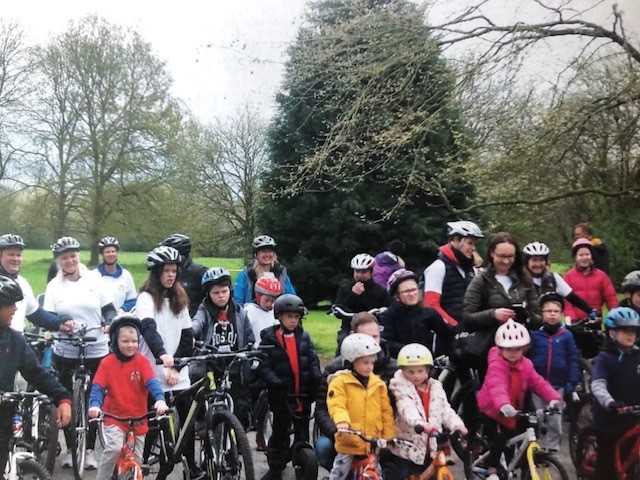
A super example of this is Carl, a true Perthes warrior, who has since become a family friend. He has taken it upon himself to organise Perthes family fun days, which we attended last year up in Derby. It was a great day, with lots of families meeting up and taking part in a cycle challenge around Markeaton Park, followed by lunch. This type of event has so many benefits. It’s good for the kids to realise they are not alone, and helpful for parents to also realise that we all ask the same questions, have the same fears and concerns, and of course it presents the opportunity for raising awareness and sponsorship.

James and Howard cycling

Carl, himself, has completed some amazing cycle challenges, as well as climbing Scafell Pike since having had a hip replacement a couple of years ago. He also pointed out to me recently that when he was a child, social media didn’t exist, and finding other kids and families with Perthes was a lot harder to do. We are fortunate, in our digital era, to be able to so easily find and connect with others, both locally and globally.

Pertheskids.org

Global connection leads me nicely to a recent discovery of this organisation, Pertheskids.org, founded in the US, but putting their arms around the global Perthes community, which I think is so important. I’d love to see the various charity organisations around the world partner more as we all have a shared goal to find out what causes Perthes and be able to put a stop to it.

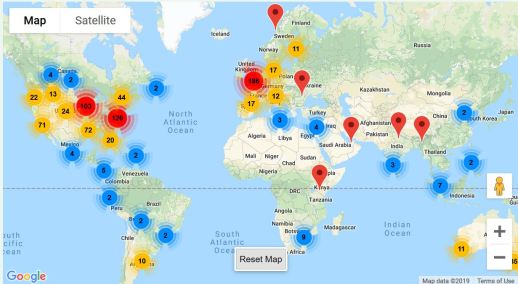
The website is full of useful information and even has a ‘locator‘ tool, enabling you to find and connect with families local to you, but also from all countries around the world. Being half Swedish, I was interested to see who had registered from Sweden. I have since connected with a Swedish family who live close to where my family come from, and when we’re next visiting, we will try and meet up with each other.

They also organise Perthes summer camps, with the first UK camp having taken place in Winchester last year. I’m not sure if we can attend the camp this year, but we will try and make it next year if not. It sounds a lot of fun with a variety of exciting activities.

World map image with location pins


Read my next blog to see what else happened in 2018.

See all posts.

‘Progress’ of Perthes throughout 2018

For various reasons, I lost momentum in maintaining this blog, and now over a year later, I’ve finally re-kindled the motivation to continue what I started last year.

I want to capture a chronological record of our journey of discovery with Perthes and therefore I have a few topics I need to include to bring us up to date! So now it’s time to write a few posts in one hit!

Second opinion – January 2018

We kicked the year off by getting a second opinion.  It felt the right thing to do and something many friends and family members were advising us to do.  Not because we lacked confidence in our consultant, but as part of our own education process, and needing to reassure ourselves that we were doing as much as we could, and not missing anything. We went to see a top paediatric orthopaedic consultant,  Mr Aresh Hashemi-Nejad, also Medical Director at the Royal National Orthopaedic Hospital, Stanmore. He validated our understanding, and approach for treatment/management at that time.

James’ arthrogram – February 2018

The next step was to have an arthrogram, which is when an X-ray image is taken of the inside of a joint after a contrast agent or “dye” has been injected into the joint. This image gives a more detailed view of inside the joint and the bone than a standard X-ray.

This entailed James’ first ever general anesthetic, which although is a common procedure, we still couldn’t help but worry about.  Funnily enough, the biggest trauma was James’ dislike for anesthetic cream and getting the cannula in, and injecting the anesthetic itself. There was no pulling wool over his eyes with ‘here comes the cold ice-cream’! Needless to say, he was asleep within seconds, and the speed in which he went from crying to a flop of his head, then set me off. It’s just a bizarre experience, walking to the theatre room with James, and then having to leave him, even though you know he’s in good hands.

When I went to see him after the procedure, I knew he was fine because his first words to me were, “Can I play on the ipad when we get back”…all was well! And as promised, 2-3 hours later, once he’d come out of woozy mode, quite happily eaten a few biscuits, and passed the ‘walk to the loo and wee’ test, we were all walking back to the car park.

The results of the arthrogram showed that right now, there was no need for any surgical intervention, there was nothing that would make a difference/improve the prognosis, which we were relieved about. Obviously if surgery is needed at any stage we will consider it, but equally, we hope we can get through this without any invasive treatment.

Follow-up x-rays in April and July 2018

Both X-rays showed signs of ‘progression’. Sadly, not in the positive sense, but as in how Perthes ‘progresses’ through the phases, where the bone continues to collapse or soften. There’s not a lot to say at these consultations other than to try and take away any positives you can. The consultant could still see a clear ‘case’ that was sitting well in the socket, and cartilage, and still not recommending any need for surgical intervention, so we go away each time, hoping that the next scan will show something else, and that we keep James out of pain in the meantime.


Follow up x-ray in December 2018

Having gone through the usual routine of getting the x-ray done before seeing our consultant, we were pleasantly surprised when he came in and said ‘we’re winning’. With that he meant that the December x-ray compared to the July x-ray showed ‘no change’.  That for us was ‘progress’ and for once in the positive sense!, We’ll take it thank you very much! And Merry Christmas!

Picture comparing hip scans
Comparison between July (left) and Dec (right) scans

Read my next blog which talks about the Perthes community.

See all posts.

From denial to acceptance


This slideshow requires JavaScript.

Following the diagnosis in October 2017, we did more reading up, sold the trampoline, ensured James didn’t take part in any high impact activities, spoke to James’ school and formed a plan that would limit his physical activities, and started hydro therapy sessions.

I think sometimes our brains, driving our thoughts and emotions have to go through some strange process to finally get to a point where we accept the reality of the situation. Even though we saw the MRI scan, had a conversation with the consultant, started physio, and we knew we had embarked on some sort of journey, we still had our heads slightly buried in the sand. Perhaps it’s clinging on to some daft hope that this isn’t really happening, and that it isn’t really as bad as we’re thinking/they are saying. And ‘it will all be ok’.

Towards the end of October James did seem to start hobbling a bit more but didn’t complain about being in pain. Friday 3rd November he was suddenly non weight bearing so we went to see his physiotherapist to get some crutches.

On my birthday the following Monday morning, we were taking our child to A&E, screaming in pain, like I’ve never heard him scream before. It was just awful. We couldn’t move him yet had to get him in the car and every tiny movement was agony for him. On hindsight of course, we probably should have called for an ambulance.

We got admitted to the children’s ward where we ended up staying the whole week, until Friday. James’ leg was put in traction and was bed bound for 4 days, in which time, they managed to ease the muscle spasms, and at least get him comfortable, and work on bringing the inflammation down. It was a tough week, sleep deprived, (me, not James!), and unbelievably worried about what it would all consequently mean.

James was also extremely anxious about anyone going anywhere near his leg, and moving it, having lost all confidence to try and put any weight on it. The Thursday evening we managed to get him out of the bed into a wheelchair. Friday, we practiced with the crutches, and also tried hydro therapy, but he wasn’t putting any weight on his right leg still. Saturday we went home, picking up a wheelchair from the British Red Cross on the way.

You can see in one of the scans the difference between his right (bad) and left (good) hips, and in the other scan the difference in his right hip between the x-ray taken in June and the one taken in November. The femural head of the left hip joint is nice and round, the femural head of the right hip joint is a more flattened shape with more black around it, where it has been collapsing.

It was at this point having had the week in hospital and seeing these pictures that the reality finally sunk in 100% and we now knew the extent of what we were dealing with. The experience of the pain, the immobility, the unknowing, the possiblity of future episodes, potential need for surgical intervention, the potential impact on James’ self-esteem, social impacts, school impact, just everything.

We went home on Saturday 11th, worried about how we would manage in the house.  James had the choice of having his mattress downstairs or on the floor in his bedroom. (He has one of these mid height sleepers with a ladder). He chose his bedroom and bravely mangaged to slowly get himself up and down the stairs on his bottom.  Another week of rest at home, and getting used to getting around on crutches.  It took a few more weeks, but with each day he very slowly became more and more weight bearing. I think it was a combined physical and mental battle, and just gaining cconfidence that he could put weight on his leg without it being painful. With a phased return to school of half days and then full days but without after school club, a lot of juggling with work, and James just taking it easy, we made it to Christmas! Thankfully he was fully weight bearing again by this time and we all enjoyed a much needed chilled-out Christmas.  I loved watching him merrily hum to himself as he helped to decorate the tree by our new cosy log burner, and knew that as we approached saying good-bye to 2017, we had to start 2018 with a fresh outlook.


Read the next blog to find out how things progress throughout 2018.

See all posts.


What is Perthes anyway?

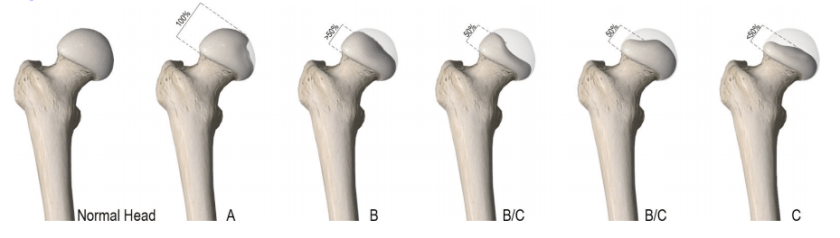
Lateral_Pillar_LCPDMost people we’ve spoken to haven’t heard of Perthes (pronounced “Pur-theeze”, and also seen as ‘Legg-Calve-Perthes’).  Usually referred to as ‘Perthes disease’ but I refuse to use the word disease because clearly it’s not something contagious, and I much prefer the word ‘condition’.

It’s a childhood disorder, which occurs when blood supply is temporarily interrupted to the ball part (femoral head) of the hip joint. Without sufficient blood flow, the bone begins to die and the hip can become intensely inflamed and irritated.

Perthes is usually seen in children between 2 and 15 years of age, with the most common age between 4 and 9. Boys are four times more likely affected than girls. Ten percent of patients will have Perthes in both hips (referred to as bilateral Perthes disease). Usually one side is affected first and then the other side will get the disease a few years later.

How is it treated? Is it something James will grow out of?

The frustrating thing is that it’s a waiting game, without knowing what the end destination will actually look like, and what it will entail on the way. No-one can tell you what will happen next and when.

We understand ‘typically’ that there are 4 stages, described below as how I understand it in my simple terms:

  • Stages 1 & 2 are when the bone is dying and then starts to fragment, which is when the joint starts to crumble/soften (and the ball could be at risk of coming out of the socket). This takes place over 1-3 years (and is where James is currently at).
  • Stage 3 is when the bone starts to regenerate (‘resossification’). This can take 2-3 years.
  • Stage 4 is when it is ‘healed’. This means the femoral head looks similar to the normal side. However, the key thing here is ‘how’ the bone has grown back, The final shape will then give us a clue as to the long term effects of Perthes. If it grows back as a nice round ball in it’s round socket (and if James hasn’t had any  operations along the way), in 5- 6 years, he might return to normal activities, and have a normal walk. If it doesn’t, he is likely to be prone to degenerative arthritis and/or need a hip replacement as a young adult. Surgical intervention could leave him with one leg shorter than the other which may leave him with a certain gait.

Why does it happen? What causes it?

Perthes is actually one of the most common hip disorders in children, however, it is still rare, with the majority of GPs only seeing one or two cases in their career.  (I read somewhere that 5 in 100,000 kids get it.) GPs will generally refer straight to a Paedriatics Orthopaedic specialist to manage the condition.

It’s a strange one because it’s sometimes seemingly an invisible condition, and even in paedriatric orthopaedics, they are still trying to understand more about it. It makes it hard for people to understand it as well. They see James walking about one day, and then on crutches or in a wheelchair the next. Perthes sufferers will have good days and bad days, and usually we find with James, that he’ll be hobbling more the next day if he’s overdone it too much the day before!  In order to avoid this, if we want to go somewhere that involves a lot of walking, we’ll use the wheelchair, to try and preserve James’ hip joint, damage limitation if you like, and ensure he doesn’t get pain the next day. But you can imagine the confused look on people’s faces when we get to our destination, and then James gets out and walks around as if nothing is wrong with him!

Whilst we understand what causes it (loss of blood supply), to date there still hasn’t been enough research to provide conclusive evidence as to why it happens. It does not have a strong genetic connection, with only about 5% of patients having a family member with the condition. (Although I have engaged with two sets of parents already where both their kids have it/had it!) It’s also not caused by direct hip injury. There is currently no cure for it. Like many other illnesses and conditions out there, we will now be continuously in support of all research and studies that aim to try and a) find the answers as to ‘why’ and b) be able to find a way of curing, better still, preventing it in the first place.

No parent should have to tell their little ones not to ‘run and jump’, the most natural things any child wants to do, and of course, no child, should have to have their childhood impacted by something like this. It’s felt in so many ways, small things in isolation but impactful collectively.  James desperately wanted to scooter to school like the other kids, and when we finally moved house, living really close to the school, we all looked forward to that becoming a reality. Two weeks into the school term, I was back to driving him to school, and we are only a 5 minute walk away! It was also heart-breaking saying good-bye to the much loved trampoline, and I hate to think about James being the only one in his class staying behind at school when all his class mates go and have fun at Forest School.

The tail end of last year was a bumpy and emotional time, and more blog posts on that, but we started 2018 with a fresh outlook, accepting that we are a Perthes family, and now finding ways to remove those limitations, identify enablers, and simply find ways of adjusting life so we still have fun, have goals, develop new skills and create great memories.

Read the next blog to find out how 2017 ended.

See all posts.


How it all started

Last May 2017, James suddenly started limping. Like any normal energetic 5 year old, he’d been running around, playing tag rugby, going mad on his trampoline, and then suddenly a limp.

As I’ve found out from other Perthes parents (and feel only marginally less guilty), the limp is initially dismissed as a sprain, growing pains, and possibly even considered being put on! It’s assumed it will go after a day or so.

After a few days, we took James to A&E. We were told it was ‘irritable hip syndrome’ or ‘transient synovitis’. Often described as a ‘cold on the hip’, where a virus places itself there instead of the usual places and can occur when a child is feeling a bit snotty. “Come back and see us if James is still limping  in a few days.”

Which of course he was.  At this time, it was half-term holiday, and James was on the Isle of Wight (IoW) with my parents. They spent a whole day at the hospital doing x-rays, ultra-sounds and blood tests. No-one suggested Perthes at this stage. X-rays didn’t show anything. Ultra-sound showed some fluid on the hip joint, and through blood tests, determined it was inflammation and not infection.

So the advice was to keep up the ibuprofen, rest and it should go in about two weeks. Two to three weeks passed, and James was still hobbling. The Doctor who had seen him on the IoW very kindly rang me to see how James was doing. On hindsight I now realise that he was perhaps concerned that it was more than transient synovitis and was following up which we very much appreciated.
He rightly advised us to get checked again, so off to Royal Berkshire Hospital we went, and got all the tests repeated. (Much to James’ dismay, blood tests aren’t fun for a lot of people!) A week later the ultra sound showed that the fluid had virtually disappeared, and James’ limp had improved, and we were signed off.

With that we went about daily life, moved house, booked a holiday and got on with the summer. There were two episodes during the summer when James was very suddenly non-weight bearing in one of his legs, and complained of pain in the knee. Oddly, he was running around again 24 hours later. We still don’t know if this is related or not. (And a trip to A&E on the first of those episodes didn’t confirm a connection to the transient synovitis either.) Was it just a sprain? Hard to not become the paranoid parent!

James returned to school in September and two weeks in, the limp returned. This time we took him to see a paedriatric othepaedic consultant at a private hospital and got an MRI scan booked in.

October 2017 we finally received a formal diagnosis of Perthes disease. The left and right hips in the scan looked significantly different.

Since then, we’ve remembered back to all the times since James was quite little, and complained of having tired legs when we were out walking, and on other occasions, sometimes complaining of having pins and needles. Other Perthes parents have talked about their child having pain at night and making for a wakeful night. James was always a wakeful baby and we put it down to other factors (dairy intolerance, nightmares, bad sleep habits), but perhaps he genuinely had pain in his legs but was too young to explain. And what do you advise with pins and needles? Hop and skip about to get the blood circulating and it’ll go away. You don’t think it’s because there might be a rare hip condition in the pipeline.

Our learnings: if your child suddenly develops a persistent limp/hobble, don’t accept a diagnosis of irritable hip syndrome/transient synovitis. Persuade your consultant for an MRI or get it done privately if possible. Don’t wait. Perthes is a long process, and waiting to have x-rays every 3-6 months to see a change in shape of the femural head is no good.  They call this ‘monitoring’ but you don’t really get the full picture as to why! Had we better understood back in May that this was a real chance of being Perthes, a) we would have pushed for an MRI sooner, and b) we would have known that it’s not just a case of rest to get better, it’s a case of rest to preserve the hip joint as much as possible. Instead, we unwittingly did the opposite and spent the entire summer letting James run and jump about as you’d expect any normal child wants to do.

More about Perthes in the next blog post!

See all posts.